


Methods for removing hair naturally have been shared across different cultures throughout history. Driven by the desire to improve skin aesthetics, various solutions have been developed to remove unwanted hair from different parts of the body.
And while their effectiveness is based primarily on anecdotal evidence, many people choose to try them before resorting to other techniques such as conventional shaving or laser hair removal. However, it’s important to keep in mind that their results vary depending on the amount and thickness of the hair and the area being treated.
Often, repeated applications are necessary to achieve noticeable results. If you still decide to try them, consider doing so with due care, especially if you have sensitive skin or any other condition. What are the options? We detail 7 recipes and how to apply them. Keep reading!
1. Sugar hair removal or sugaring
Sugar waxing, also called sugaring, is a natural hair removal method that involves applying a sticky paste. While it’s used similarly to waxing, there are some differences.
As dermatologist Amy Kassouf of the Cleveland Clinic explains, the main difference between them is the way the hair is pulled off. While wax is applied in the same direction and removed in the opposite direction, sugar paste is applied in the opposite direction and pulled off in the direction of hair growth.
These characteristics offer several advantages, such as less post-hair removal irritation, as well as an exfoliating effect because it removes dead skin cells. It is also believed to help hair grow back tthicker Its effects last between two and three weeks.
Ingredients
- 10 drops of lemon juice.
- 2 cups of sugar (400 grams).
- 1/4 cup of water (59 milliliters).
Instructions
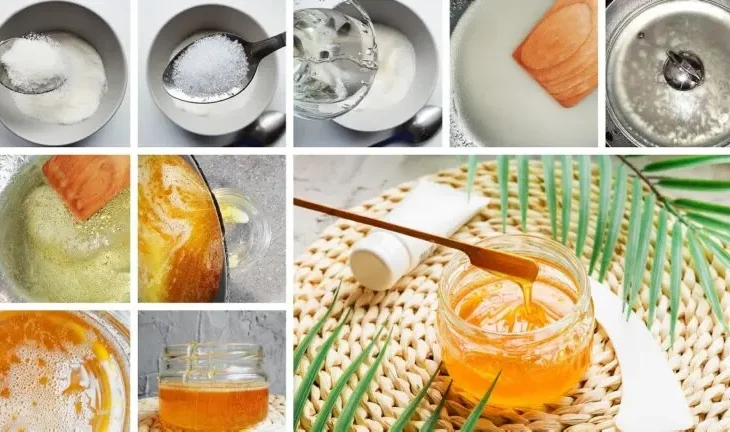
In a medium saucepan, combine the cups of water, lemon juice, and sugar. If the mixture isn’t moist enough, add another splash of water.
Next, heat it over medium-high heat and stir well until the sugar dissolves and turns a caramel color. Then, transfer the mixture to a container and let it cool to a comfortable temperature for your skin. Be careful not to let it solidify.
Once you’ve reached the desired consistency, apply it to the targeted areas (these must be clean and dry). You can use a wooden stick to spread the product evenly in the opposite direction of hair growth. Let it dry slightly and then peel it off in the direction of hair growth. You’ll notice the hairs being removed.
2. Pasta with baking soda and oats
There is no evidence that baking soda can remove hair; this oatmeal preparation is a recipe that comes from folk literature. Those who have tried it suggest that it can weaken hair and slow its growth. Additionally, due to its texture, it also works as an exfoliant.
Ingredients
- 1 splash of water.
- 2 tablespoons of ground oats (20 grams).
- 2 tablespoons of baking soda (20 grams).
Instructions
Combine the baking soda with the oat flour and moisten it with a splash of water. Once you have a paste, rub it onto the desired areas (legs, upper lip, bikini line, arms, etc.).
Leave it on for 20 to 30 minutes until it dries on the skin.
When removing it, gently massage in circular motions to help loosen the hairs. Rinse off any residue with lukewarm water. You can reapply it twice a week for the best results.
3. Jelly and aloe vera face mask
Both gelatin and aloe vera are valued for their moisturizing and skin-repairing properties. Beyond that, their sticky texture is used to naturally remove facial hair.
Ingredients
- 1 jet of water.
- 2 tablespoons of aloe vera (30 grams).
- 4 tablespoons of unflavored gelatin (60 grams).
Instructions
Add the unflavored gelatin and aloe vera gel to the blender. Then add a splash of water. Blend for a few moments until you get a thick paste.
Rub it onto the unwanted hairs and let it dry. Then, remove it in the opposite direction of hair growth. You can apply it twice a week if needed.
Recommendations
It’s important to keep in mind that these natural hair removal preparations come from folk remedies and haven’t been tested by dermatologists. Therefore, even though they’re based on natural ingredients, they should be used with caution.
For some skin types, especially sensitive skin or skin prone to eczema, using these ingredients can be irritating. In these cases, it’s best to consult a dermatologist about the recommended hair removal technique. Before trying any of the methods, you can also do a patch test. How do you do it?
Apply only a small amount of the product to your skin and leave it on. If after a couple of hours there are no reactions such as irritation, redness, or itching, you can use it without worry. Otherwise, rinse thoroughly with water and discontinue use.
Are there other ways to remove hair naturally?
Over the years, numerous recipes for natural hair removal have been promoted. While we’ve highlighted the five most popular, others seem to have similar effects. The drawback? Their effectiveness is uncertain.
Most are prepared with ingredients that have exfoliating properties and adhere to the skin. The theory is that this weakens hair follicles. However, they are not as effective as other methods. Some examples include:
Papaya and turmeric: After crushing a slice of papaya, mix it with a tablespoon of turmeric. Then, let it dry and remove it with gentle massages.
Cornflour and egg: Combine three tablespoons of cornflour with one egg white. Apply the paste to the desired areas, let it dry for 30 minutes, and massage to remove hair.
Honey and lemon: Add a few drops of lemon juice to three tablespoons of honey. Rub the mixture on and leave it on for 20 minutes. Then, remove it with gentle circular motions.
Other methods that fall under the concept of natural hair removal include beeswax, tweezers, and threading. However, these should be applied by a professional to avoid skin irritation. If done at home, extreme care must be taken.