


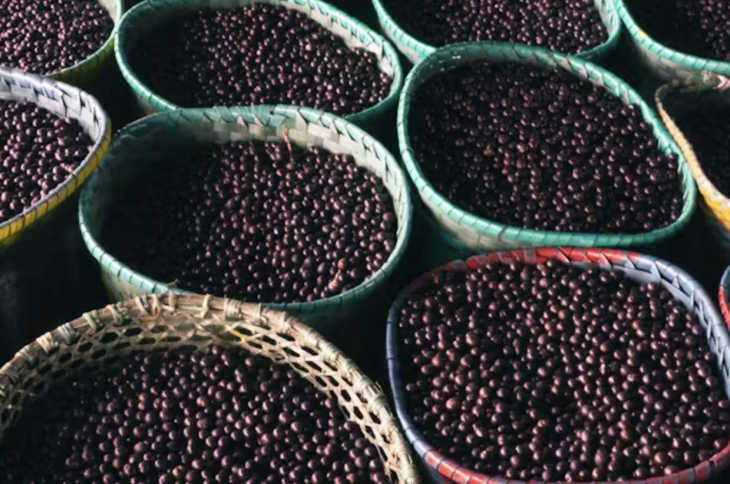
Açaí (Euterpe oleracea), a fruit native to the Amazon, has gained worldwide fame in recent years as a superfood. Its widely recognized nutritional benefits have led to a huge increase in national and international demand.
According to the Brazilian Institute of Geography and Statistics, Brazil produced around 1.6 million tons of açaí in 2023. However, this popularity has brought with it a major environmental problem: the seeds, which represent more than 70% of the fruit’s weight, are often disposed of improperly.
At the beginning of the 2000s, Professor Roberto Soares de Moura, from the Roberto Alcântara Gomes Institute of Biology of the State University of Rio de Janeiro (IBRAG/UERJ), visited the state of Pará, Brazil’s main producer of açaí.
During her trip, she witnessed firsthand the impacts caused by the improper disposal of these bones. This sparked her interest in investigating the medicinal properties of this waste, in collaboration with Professor Angela de Castro Resende.
At that time, there were few initiatives to reuse these seeds. Over the years, some interesting projects have emerged, ranging from the production of cosmetics, bioplastics, paper, and biochar to furniture and footwear.
However, its pharmacological potential is still largely unexplored. It was already known that the fruit pulp was rich in polyphenols, compounds found in plants, such as resveratrol in red grapes and phenolic acids in teas.
These substances are known for their antioxidant, anti-inflammatory, and disease-protective properties. This led to the hypothesis that pumpkin seeds might also contain antioxidants.
After several years of studies –funded by the Carlos Chagas Filho Foundation for Research Support in the State of Rio de Janeiro (FAPERJ)– our team has confirmed that dietary supplementation with açaí seed extract has very promising effects against obesity and diabetes, demonstrated in various animal models and cell cultures.
Benefits for the liver and metabolism
Since the first results, published in 2010, we have observed that by adding a supplement containing açaí bone extract to this diet, the animals gained 40% less weight and had 14% lower glucose levels and 70% lower insulin levels.
In addition, cholesterol and triglyceride levels remained normal, although they were about 50% higher in those who received only the fat diet.
Later, we discovered that the combination with the extract also led to less fat accumulation in the liver, even in mice that continued to consume the high-calorie diet. When combined with physical exercise, the extract promoted even more significant results: a 70% reduction in blood glucose, an 81% reduction in total cholesterol, and a 72% reduction in liver fat.
Impacts on the gut and brain
Bone extract has a similar action to metformin – one of the main drugs for treating diabetes – but with slightly different mechanisms and some specific advantages.
Furthermore, as expected, the high-fat intake altered the gut bacteria population. Both treatments restored a healthier balance, but the extract went further: it increased the production of short-chain fatty acids, beneficial substances that support gut health and metabolism.