





With over 5,000 scientific references, garlic is one of the most studied plants. Its properties make it one of the best examples to validate the Hippocratic aphorism that “food should be thy medicine and medicine thy food.”
The garlic plant (Allium sativum) belongs to the lily family, like onions and leeks. Although it is believed to have originated in Central Asia, it arrived in the Middle East approximately four thousand years ago and is now cultivated and used worldwide.
Nutritional values of garlic
How many calories are in garlic?
In every 100 grams of garlic, we find the following nutrients
- Calories: 135 kcal
- Protein: 6 g
- Fats: 0.1 g
- Carbohydrates: 27.5 g
- Fiber: 0.7 g
Properties of garlic
Garlic combines a balanced supply of nutrients with sulfur compounds and other substances that give it its many medicinal properties.
Unique sulfur compounds
Garlic cloves contain between 0.2% and 0.3% essential oil: garlicin, alliin, or allylcysteine sulfoxide (1%), which, when hydrolyzed by alliina, produces allicin.
This occurs when fresh garlic is crushed or chewed. Allicin gives garlic its characteristic smell and taste, and it quickly transforms into allyl disulfide and other volatile sulfur compounds, which are primarily responsible for its beneficial effects.
In addition, it contains fructans, oligosaccharides that feed the beneficial gut microbiota, which is linked to good overall health.
It also contains enzymes –peroxidases and lysozymes, among others– essential for the medicinal action of garlic to occur.
Rich in minerals and vitamins
In addition to all the nutritional properties already mentioned, garlic contains small amounts of iron, silicon, sulfur, iodine, manganese, selenium, and vitamins B1, B2, B6, and C.
Benefits of garlic
Garlic was used in Egyptian culture, along with onions and bread, as a staple food, and in the Hippocratic medicine of Greece. In ancient Rome, Galen, Pliny the Elder, and Dioscorides mention its use in treating parasites, respiratory problems, and digestive disorders.
Friend of the circulatory system
Among its various health benefits, it is worth highlighting its significant role as a cardiovascular protector. It prevents and improves arteriosclerosis, inhibits the synthesis of LDL cholesterol (the “bad” cholesterol) and triglycerides, improves blood clotting, and increases arterial elasticity.
In cases of intermittent claudication – when arteriosclerosis affects the legs and forces you to stop often while walking due to the pain it causes – it helps blood to reach the muscles better.
Garlic consumption is also beneficial for hypertension and an accelerated heart rate.
Healthy airways
Garlic helps fight respiratory infections such as the flu and the common cold due to its antiseptic properties.
It also dilates the bronchi, thins mucus, and stimulates the immune system. Because of these properties, consuming garlic is especially helpful in cases of sinusitis, pharyngitis, tracheitis, bronchitis, emphysema, and asthma.
Helps against infections
In addition to fighting the flu and colds, garlic combats urinary tract infections, intestinal parasites, and ear infections. However, it is not a substitute for antibiotics when prescribed by a doctor.
Essential in the kitchen
Although it can be found in herbal shops and health food stores in pearls, tinctures, and other presentations, there is no more effective and complete garlic remedy or medicine than the fresh cloves themselves, consumed regularly.
How to prepare garlic so that its properties are not lost
If you heat a whole clove of garlic, you will waste a large part of its properties.
The best way to consume garlic is raw. If you want to cook it, crush it well half an hour beforehand; this will allow the beneficial substances to form and withstand the heat.
Including 1 to 4 cloves in your diet daily allows you to benefit from their properties, both to prevent and to alleviate certain health problems.
Mediterranean ingredient
Garlic is a small but popular ingredient, celebrated in Mediterranean cuisine. There are several varieties:
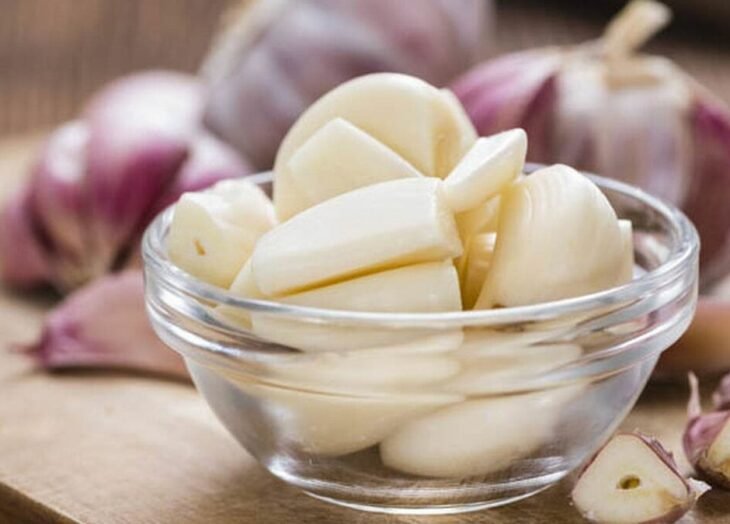
- White garlic: these are the most common, with a strong flavor, and are consumed dried. Look for firm, heavy heads with a dry outer layer and no sprouts.
- Purple garlic: the layer that covers them is purple; they mature earlier and are usually larger, but being more tender, they keep for a shorter time.
- Spring garlic or young garlic: harvested before the bulb develops, in spring; they are mild, suitable for salads, stir-fries, scrambled eggs, and omelets.
Tips for using garlic comfortably
To soften their flavor and prevent them from being spicy, the cloves are split in half, and the green germ is removed with a knife, or they are blanched for a minute or left to soak, peeled, for a couple of hours.
Another option is not to use garlic directly, but flavored oil, or to rub the salad bowl with a clove.
To peel them easily, they are crushed with the thumb or the blade of a knife.
To remove the smell from your hands, wash them under running cold water, without rubbing.