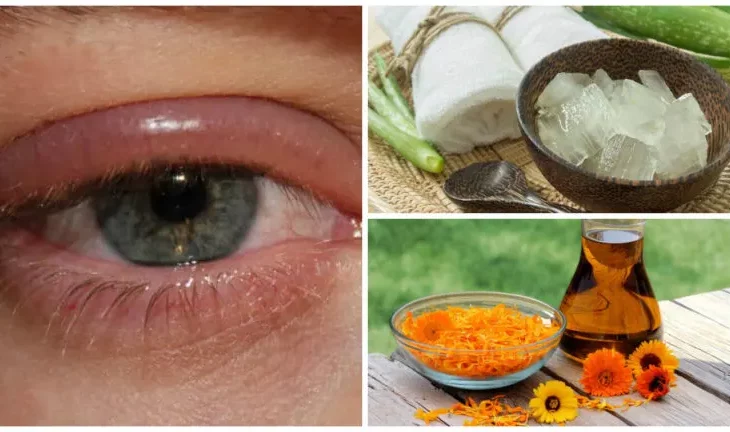


What’s that in your left eye? You suddenly woke up with a strange discomfort, and when you looked in the mirror, your world crumbled. Don’t worry, there are very simple natural methods to cure a stye quickly.
Of course, before starting to use any of the home remedies presented below, it is highly recommended to visit an ophthalmologist for a proper diagnosis and to discuss the use of natural options with them.
Why do styes appear?
The American Academy of Ophthalmology (AAO) explains that a stye arises due to inflammation of the sebaceous glands located at the base of the eyelashes or on the eyelids. These are the Zeiss, Moll, and Meibomian glands.
The most common cause is bacterial overgrowth, usually of the Staphylococcus aureus (staph) species, although other pathogens may be involved. They can also be caused by blepharitis (chronic inflammation of the eye), hormonal changes, and stress.
The healing process for a stye can take up to 20 days. It’s generally not a serious condition; however, it can be very painful and unsightly. If the problem persists longer than this, you should see a doctor promptly.
So, do you know the main symptoms of a stye or a chalazion? It’s important to recognise these symptoms so you can see an ophthalmologist quickly. The American Academy of Ophthalmology (AAO) notes the following:
- Sensitivity to light.
- The discomfort when blinking.
- The gritty feeling in the eye.
- Redness in the affected area and swelling of the eyelid.
- The sensation of tingling, stinging, burning, or pain in the affected area.
- The presence of eye discharge.
- Constant tearing and mucous secretions from the affected eye.
- Blurred vision.
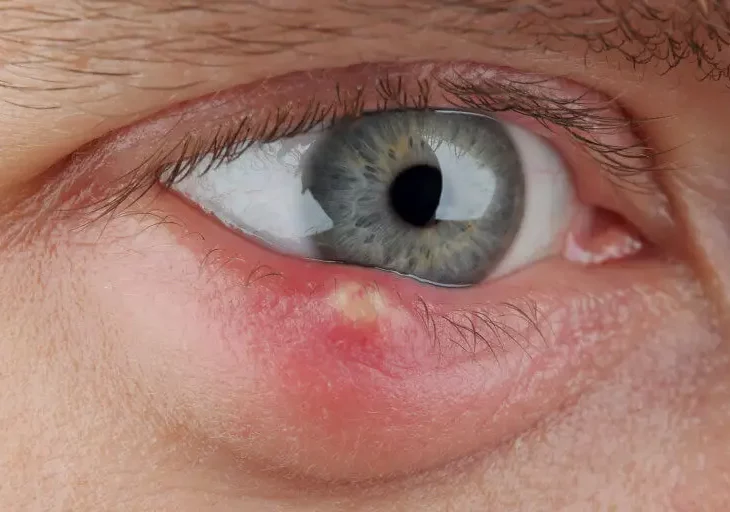
- The appearance of a small yellowish or reddish spot, similar to a pimple about to drain.
Types of styes
The next step is to identify the type of stye you have. This is very easy, as it relates to the area of the eyelid where it is located and how it manifests:
External stye
It is a reddish inflammation on the edge of the eyelid that often presents with a yellowish spot, similar to a pimple. It tends to drain spontaneously and heal in a short time.
Internal stye
An internal stye is an abscess located inside the eyelid. The most common cause of this inflammation is an infection in the eyelid’s oil-producing gland.
It usually presents as a reddish spot, similar to a pimple. It takes longer to drain and heal than an external one; if there are no positive changes within the first 10 days, it is recommended to see a doctor immediately.
Chalazion
It’s quite common for a chalazion to start as an internal stye and then grow, causing swelling and redness of the eyelid. It may feel very tender to the touch.
An initial warning
Remember that this type of inflammation usually appears as a result of exposure to bacteria. Therefore, in addition to knowing how to treat a stye quickly, try to:
- Do not touch, squeeze, rub, prick or try to remove your stye, as this could spread the infection, damage the tear glands or the eyeball itself.
- Take extra hygiene precautions to keep the area clean and prevent infections.
- Do not wear makeup until the eye has completely healed.
- Avoid using contact lenses, as they can become contaminated and transfer bacteria to the healthy eye.
It is advisable to consult a doctor before applying any medication.
How to cure a stye quickly?
Several natural treatments can help relieve symptoms and get rid of a stye. However, remember that if the swelling and redness spread or last for too long, you should consult your doctor immediately.
1. Warm water
Warm water is the most common treatment, as Dr James Garrity indicates. This process helps to drain the pus from the stye.
Boil a litre of water and let it cool until lukewarm. Then, dampen a clean cloth with this water and place it on the affected eyelid for 10 minutes; you should re-wet the cloth each time it cools down.
2. Cilantro to cure a stye quickly
Coriander seeds are said to be an interesting natural remedy for quickly curing a stye due to their proven anti-inflammatory and antioxidant properties.
Boil one teaspoon of coriander seeds in one cup of water and wait one minute after it reaches a boil. Let the solution cool, strain it, and use it to clean the affected eye three times a day.
3. Tea bag
The tannins present in black or green tea leaves may also help reduce swelling due to the anti-inflammatory effect suggested in a study titled Evaluation of anti-inflammatory effects of green tea and black tea: A comparative in vitro study.
To benefit from its properties, moisten a tea bag with boiled water. Once lukewarm, place it on the stye for ten minutes. You can do this every day until it disappears.
4. Parsley
A 2016 study found that fresh parsley leaves have antibacterial properties; therefore, they could help improve the symptoms of a stye.
If an infusion of parsley is made in boiling water and then applied warm, it is believed to reduce inflammation and sensitivity of the eyelid.
Let the solution sit, then soak a clean cloth in it and use it as a compress until it cools. Do this in the morning and before going to bed at night.
5. Chamomile to cure a stye quickly
To cure a stye quickly, you can try using a chamomile infusion since, citing the results of a systematic review by Electronic Physician, this herb has antibacterial effects that could fight the bacteria that cause styes.
Add a handful of chamomile leaves to two cups of boiling water. Then, strain the solution and let it cool; when it is lukewarm, dampen a clean cloth with it and place it on the affected eye for 10 minutes, twice a day.
See a doctor if you have a stye.
Children are more prone to frequent styes than adults, and when it comes to them, you should always see a doctor for diagnosis and treatment.
Also, keep in mind that prevention is always best. To do this, keep your hands clean and avoid touching your eyes or using irritants in them. If they still appear and persist for several days, see a doctor.