






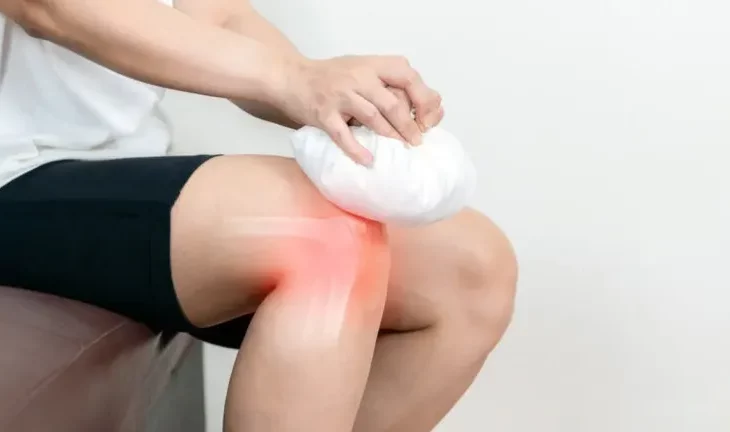
Although protected by fluids, ligaments, and tendons, knees are joints prone to injury. Among the causes of knee pain, arthritis and ligament and tendon injuries are some of the most common.
Sometimes, it occurs due to wear and tear on the joint itself or due to everyday actions, such as getting up from a chair or kneeling.
For the first 48 hours after experiencing pain, it’s advisable to rest and only gently move the joint every hour. You can also take knee pain medication such as diclofenac, naproxen, or ibuprofen, although it’s best to consult a doctor before taking any prescribed medication.
Fortunately, when alternative therapeutic methods are required to relieve it, there are several natural remedies for knee pain that, due to their properties, improve circulation and reduce inflammation in the affected area.
Below, we share in detail these options to quickly relieve knee pain.
1. Price Therapy
The PRICE protocol is an initial treatment that employs five fundamental steps to treat most injuries: protection, rest, ice, compression, and elevation. Its primary goal is to reduce intramuscular bleeding and pain in the injured area.
- Protection: To prevent the pain from worsening, it’s important to immobilize the area. Depending on the case, you may need a knee brace or crutches to walk.
- Rest: especially during the first two days of feeling pain, it is recommended to rest and move the knee as little as possible.
- Ice: Especially in the case of soft tissue injuries, ice can improve pain and reduce inflammation. Wrap an ice pack in a towel and apply it to the knee for 10 to 15 minutes every two hours.
- Compression: Applying compression to the knee with an elastic bandage or splint can help reduce intramuscular bleeding in the area and promote faster recovery. Remember that the compression should be moderate and continuous.
- Elevation: While resting, raise your leg above heart level using pillows. This will help limit bleeding and the accumulation of interstitial fluid.
2. Exercises for knee pain
Exercise is essential for improving joint movement and function. As Harvard Health Publishing indicates, stretching and exercises for knee pain are helpful in cases of discomfort in the front of and around the kneecap, as well as for meniscus tears and osteoarthritis.
How to do the exercises
- Lie on your side with your legs outstretched and flex your forearm to rest your head on the palm of your hand.
- Raise your top leg as high as you can. Do 10 repetitions and switch sides.
- Next, lie on your back with your legs extended and raise one leg slightly at a time, without lifting your hips off the floor. Repeat 10 times with each leg.
- Next, stretch your hamstrings. In the same position as the last exercise, raise one leg and grab it with your hands behind your thigh. Hold that position for 30 seconds and switch legs.
- Finally, stretch your quadriceps while standing. To do this, bend one leg and bring your ankle towards your buttocks. Hold your foot with your hand and maintain the position for 30 seconds. Repeat on the other side.
3. Compresses with arnica infusion
Natural arnica extracts can be used externally to soothe pain and inflammation affecting knee health. Arnica contains anti-inflammatory, analgesic, and anti-arthritic substances that can help relieve pain.
You can find arnica cream or various other forms, such as gels, teas, or tablets, but it’s only recommended for external use. Even so, if you experience a rash, itching, or dry skin, discontinue use.
Ingredients
- 1 cup of water (250 milliliters)
- 2 tablespoons of dried arnica (20 grams)
Preparation
- Bring a cup of water to a boil and, when it reaches a boil, add the arnica.
- Let it rest for ten minutes and then strain it.
Application mode
- Soak a clean cloth in the infusion and apply it to your knees.
- Leave it on for ten minutes and, if necessary, repeat its use twice a day.
4. Olive oil and ginger
Although more research is needed, it is believed that the fatty acids in olive oil are natural anti-inflammatories that may reduce knee and muscle pain. It has beneficial effects both when consumed orally and when applied topically.
In this case, we enhance its benefits with the analgesic and anti-inflammatory properties of ginger. In fact, ginger can reduce pain and has potential as an alternative method for knee pain relief. For this reason, it is often used for rheumatism, arthritis, and muscle pain.
Ingredients
- 1 ginger root (50 grams)
- 1 cup of olive oil (200 milliliters)
Preparation
- Grate the ginger, place it in a heat-safe glass jar, and add the olive oil.
- Meanwhile, heat some water in a pot. Then, add the jar and let it cook in a water bath for 30 minutes.
- Once that time has passed, turn off the heat and let the mixture cool down a little.
- Finally, filter the liquid through a cloth and keep it in an airtight jar.
Application mode
- Take a little of the oil and rub it on your knees with a gentle massage.
- Let it absorb without rinsing and repeat its use at night.
5. Eucalyptus oil
Similar to peppermint oil, eucalyptus oil is used as an anti-inflammatory and antispasmodic. Because of these properties, it may help reduce the symptoms of knee osteoarthritis.
Ingredients
- 1 teaspoon of eucalyptus oil (5 grams)
- 1 tablespoon of coconut oil (15 grams)
Preparation
- In a container, place the eucalyptus oil and add the coconut oil.
- Mix them well.
Application mode
- To use it, take a little in your hands and rub it on your sore knee.
- Massage until absorbed and repeat twice daily.
When should I consult a doctor?
Knee pain can occur without any injury. Sometimes, simple everyday activities can trigger it, or it may even have no clear cause. When home remedies for knee pain don’t work, or if the pain worsens over several weeks, you should see a doctor.
It’s also important to consult a doctor if the pain intensifies and spreads down the leg or into the back. If you experience general swelling, burning in the knee, fever, or an inability to rest, you should seek medical attention immediately.