



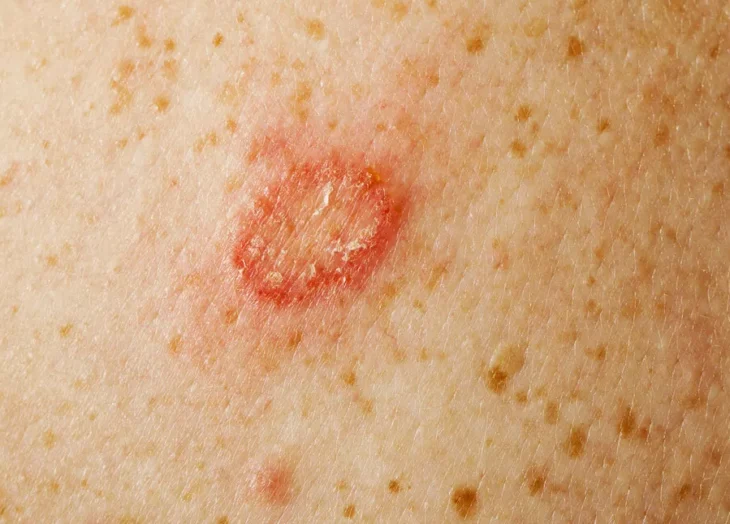
There are a number of natural remedies for treating skin fungus, which can be used as a complement against this type of skin condition.
It is important to note that fungal infections are caused by different types of fungi, including dermatophytes and yeasts. These fungi colonize dead keratin, a protein found in the skin, nails, and hair.
They can appear in different areas, have different shapes, and generally cause symptoms such as itching, redness, and scaling. Treatment can vary depending on the type of fungus and the severity of the infection.
As highlighted in a publication in The Journal of Fungi, this treatment is based on antifungal medications. And while they are not a substitute for medication, applying natural remedies to treat fungal skin infections can contribute to symptom relief. Are you willing to try them?
Causes of skin fungus
Many types of fungi can cause skin infections. Among the triggering factors that contribute to their overgrowth are:
- Weak immune system. The appearance of fungi can indicate that the immune system is weakened and that the body cannot fight them off.
- Transmission. One example is in gym or swimming pool showers. The fungus is found on the damp floor, and from there it enters and settles between the toes.
- Poor hygiene and excessive moisture make skin more prone to fungal growth. Therefore, after bathing, it’s essential to thoroughly dry skin folds, between the toes, and all those hard-to-reach areas.
- Similarly, some people sweat more. This creates the ideal environment for these microorganisms to proliferate.
- Excessive sebaceous secretion.
- Poor diet and low vitamin intake. Not eating properly lowers the immune system.
- Stress. It is known to lower the immune system and, as we have already indicated, this allows fungi to reproduce more easily.
Remedies
Evidence regarding the safety and effectiveness of some of these natural remedies for treating fungal skin infections remains limited. Therefore, they may not work as expected in all cases. However, if you wish to try them, the options are detailed below.
1. Diet
As noted in a publication in The American Journal of Clinical Nutrition, nutrition is a key determinant of immune responses. Nutrients such as zinc, selenium, iron, copper, vitamins A, C, E, and B6, and folic acid have significant influences on the immune system.
Therefore, when fighting fungal skin infections, it is essential to improve your diet, ensuring you include these sources of nutrients. In general, the following is advised:
Avoid red meat, white flour, sugars, and cow’s milk, as these slow down transit in the intestines.
Increase your consumption of fruit, especially citrus fruits, vegetables, and whole grains. Natural juices help boost your immune system.
2. Natural yogurt
Research suggests that probiotics play an important role in the treatment of fungal infections. A recent study published in the Journal of Microbiological Methods highlights their usefulness as antimicrobial and antifungal agents.
In this regard, yogurt fights fungi thanks to its supply of lactobacilli, a beneficial bacterium that combats these microorganisms.
On the other hand, if applied locally to the affected area and rubbed in, it helps to fight and relieve the symptoms of fungal skin infections.
3. Lemon juice
The antifungal properties of lemon against skin fungi are not yet sufficiently supported by scientific evidence. However, a study published in the International Journal of Molecular Sciences found that it could be used to treat dermatophytosis in animals.
Despite this, it is unknown whether it is effective against fungal infections in humans. Furthermore, its topical application may be irritating to sensitive skin.
Therefore, this remedy should be used with caution, only at night. Exposing the skin to the sun after using lemon can cause blemishes. The best way to reduce the risks is to dilute it in water.
4. Cranberry juice
Consuming cranberry juice helps strengthen the immune system and, as a result, promotes relief from fungal skin infections.
Among other things, research published in Advances in Nutrition revealed that it helps strengthen the microbiota, which is also crucial for boosting the immune system.
5. Tea (topical use)
As noted in a publication in Critical Reviews in Food Science and Nutrition, the tannins contained in tea can help inhibit the growth of many fungi, yeasts, bacteria, and viruses.
Topical application of tea helps relieve fungal skin infections thanks to its antifungal effects.
In addition, it soothes burning and itching.
For best results, apply to the area two or three times a day.
6. Olive leaf
Olive leaves can help in two different ways: in addition to strengthening the immune system, they have antifungal properties that help fight fungi. This is supported by a study published in Current Medical Mycology, which specifically suggests effects against Candida albicans.
Drink a cup of olive leaf tea (prepared with one tablespoon of leaves per cup of water).
Apply it locally to the affected area.
7. Sea salt
There are no studies that support the use of sea salt as a natural antifungal. However, it is an ingredient that has been used in alternative medicine for this purpose. Therefore, if you wish to try it, follow the procedure we share below.
Ingredients
1 glass of water (200 ml)
2 tablespoons of sea salt (30 g)
What should you do?
We will add the salt to the glass of water, mix well, and apply it locally several times a day.
8. Garlic
Without a doubt, garlic is one of the most popular remedies for combating skin fungi due to its antifungal properties. In fact, a study published in the Iranian Journal of Basic Medical Science concludes that it could be used as an alternative treatment for dermatophytosis.
Its uses include:
Ingested: a clove of raw garlic, which can be used in salads or taken with water.
Topical: a crushed clove of garlic on the affected area.
Note: Avoid use on sensitive skin, as it may be irritating.
9. Oregano oil
Oregano oil is a product with interesting medicinal applications. Among these, research published in the International Journal of Current Microbiology and Applied Sciences (IJCMAS) found that it serves as an antifungal ingredient. Therefore, it may be an option to help treat fungal infections.
Ingested: two or three drops in a glass of water.
Topical: Mix oregano oil with olive oil in equal parts and apply to the affected area.
10. Coconut oil
The fatty acids in coconut oil have significant benefits for the skin. A study published in the Journal of Medicinal Food indicates that it has antimicrobial and antifungal properties. Therefore, it can be used to treat infections.
To take advantage of its benefits, it is used on the affected area two or three times a day.
11. Apple cider vinegar
There is insufficient evidence to support the effectiveness of apple cider vinegar against skin fungus. However, studies suggest may be beneficial against this type of problem due to its content of compounds such as acetic acid.
Ingredients
2 tablespoons of water (30 ml)
1 tablespoon of apple cider vinegar (15 ml)
What should you do?
Combine both ingredients and rub on the affected area, using gauze or cotton.
It should be avoided for use on sensitive or wounded skin, as it is irritating.
12. Tea tree oil
It’s a natural antifungal that also prevents the fungus from spreading to other parts of the body. A study published in Skin Pharmacology even supports this property and suggests it’s useful for problems like dandruff.
It is used diluted in water (3 to 5 drops), topically, massaging into the affected area.
13. Turmeric
Turmeric has been recognized as a good natural antifungal. This property appears to be largely due to its curcumin content. It can also be used in two ways:
Local application: Place it on the affected area and leave it for a couple of hours. Then rinse.
Ingested: in the form of an infusion, accompanied by milk and honey.
14. Colloidal silver
Scientific studies have suggested that colloidal silver has antifungal properties that may help dry out the fungus. However, evidence regarding its safety and efficacy is still insufficient.
Its extracts can be used according to the herbalist’s instructions.
15. Aloe vera
Aloe vera has countless properties, and its antifungal properties stand out among them. This is supported by research published in the journal Fitoterapia, which concluded that this effect varies depending on the species of fungus.
Cut the leaf and apply the gel inside to the affected area several times a day.