





Various studies have examined its role in traditional Chinese medicine due to its immunostimulatory and anti-inflammatory effects.
Also known as huáng qí or milkvetch, astragalus is an herb native to northern and eastern China, where its roots have been harvested and used for centuries to protect “qi” or vital energy, and to treat various conditions such as colds, allergies, and fatigue.
Over the years, various studies have examined its role in traditional Chinese medicine—where it is often found in different formulas, usually combined with other herbs—for its immunostimulatory and anti-inflammatory effects, its impact on kidney and heart health, and its role in regulating blood sugar levels.
Although there are more than 2000 species of this plant, only two of them – Astragalus membranaceus and Astragalus mongholicus – are used, due to their specific chemical composition and proven safety.
Benefits of consuming astragalus
The main active compounds are polysaccharides, saponins, and flavonoids. “These are responsible for its health benefits, such as cell protection, inflammation reduction, and immune support,” says Milagros Sympson, a nutritionist (MN 12067), and elaborates on the role of each compound:
- Polysaccharides: stimulate the immune system, promoting the activity of macrophages and lymphocytes. They have antioxidant and anti-inflammatory properties.
- Saponins: Astragalosides (such as astragaloside IV) are known for their cardioprotective, immunomodulatory, and anti-inflammatory effects. They can improve cellular function and protect against oxidative stress.
- Flavonoids: They act as antioxidants, protecting cells from damage caused by free radicals. They contribute to anti-inflammatory and anti-aging properties.
- Triterpenoids: support cardiovascular and liver health. They have antioxidant effects and can modulate the immune response.
Sympson also refers to the presence of amino acids and trace elements—such as iron, zinc, and magnesium—that support general metabolic functions; and phytosterols, which help regulate cholesterol levels and have anti-inflammatory effects.
Among the benefits associated with astragalus consumption confirmed in scientific studies, the nutritionist highlights the following:
1. Strengthening the immune system
Research published by the National Institutes of Health (NIH) suggests that astragalus has antimicrobial and antibacterial properties. This is due to the presence of flavonoids and polysaccharides, active compounds that support the immune system by stimulating the production of white blood cells (responsible for preventing disease) and suppressing the growth of harmful microorganisms.
A 2023 review of 19 studies (which included 1,094 participants) found that astragalus improved immune responses and reduced levels of pro-inflammatory cytokines (a type of protein produced by certain immune and non-immune cells with an effect on the immune system).
Sympson adds that some small clinical trials in humans have shown that astragalus can increase antibody production and improve the immune response in people with weakened immune systems.
2. Cardiovascular protection
The astragalus is believed to widen blood vessels and increase the volume of blood pumped from the heart. “By reducing oxidative stress, it can improve endothelial function and lower blood pressure,” Sympson notes.
Various studies published by the NIH conducted on patients with heart failure have associated the consumption and intravenous administration of different doses of this plant with significant improvements in symptoms.
In a clinical study, heart failure patients who received 2.25 grams of astragalus twice daily for two weeks (along with conventional treatment) experienced greater improvements in heart function compared to those who received only standard treatment.
In another study, heart failure patients received 60 grams of astragalus daily intravenously along with standard treatment and showed significant improvements in symptoms.
3. Support for kidney health
By improving blood flow, the talus may improve laboratory markers of kidney function. For example, the talus has been shown to improve proteinuria (the abnormal presence of protein in the urine, which can indicate kidney damage or abnormal kidney function) in several studies of people with kidney disease.
“Especially in cases of diabetic nephropathy and chronic kidney disease, the consumption of astragalus showed protective effects on the kidneys,” Sympson notes, and refers to a clinical trial published in the Journal of Diabetes Research (2020) that found that astragalus, combined with conventional treatments, improved markers of kidney function in patients with diabetic nephropathy.
4. Anti-aging properties
The anti-aging properties of astragalus are especially popular in the wellness world, and there is some evidence to support this benefit. “Astragalosides—particularly astragaloside IV—have been studied for their ability to activate telomerase, an enzyme that protects telomeres and could slow cellular aging,” explains Sympson. “Although human studies are limited, animal research suggests anti-aging potential.”
Forms of consumption and recommendations
The most recommended way to consume astragalus—especially if used for specific therapeutic purposes such as immune or cardiovascular support—is in supplements (capsules or tablets) due to its bioavailability and precise dosage, explains Sympson.
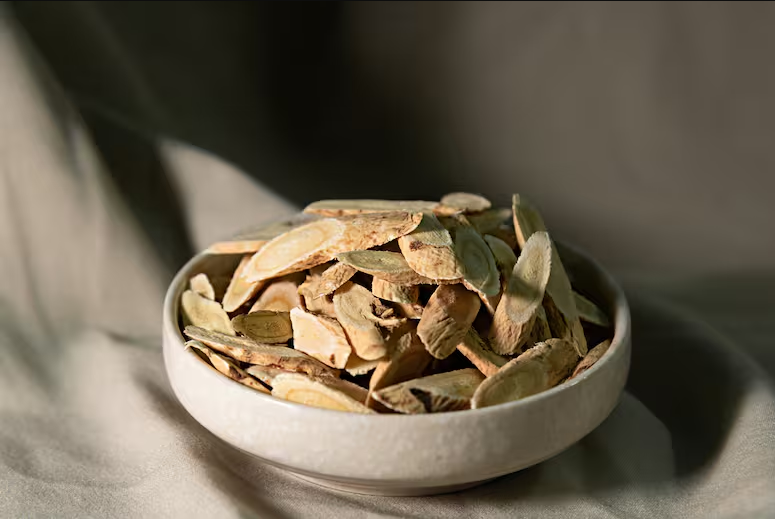
While the dried root—which concentrates a large portion of its bioactive compounds—is a good option for those who prefer a more traditional approach. In this case, it is prepared as a decoction by boiling the root in water for 30–60 minutes.
Although there is no official dosage recommendation, according to a review of studies published by the NIH, up to 60 grams daily for up to four months is safe for most people.