


It’s important to talk to a doctor before reducing or stopping a prescription medication or starting an herbal supplement. Some herbs can cause side effects or interact with other medications.
1. Chamomile
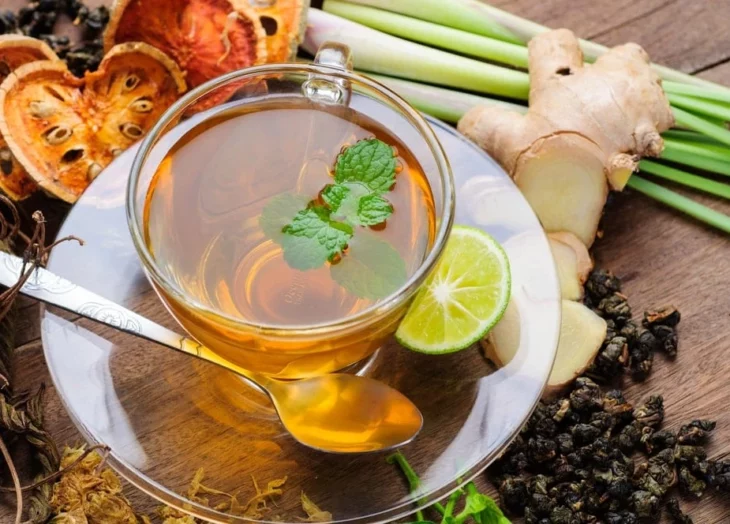
Chamomile is a flowering herb similar in appearance to a daisy. There are two types of chamomile that people can use for medicinal purposes: Roman chamomile and German chamomile.
Some people use chamomile in the following ways to help relieve stress and anxiety:
- tea
- extract
- tablet
- skin cream
A 2016 clinical trial investigated the efficacy and safety of chamomile as a long-term treatment for generalized anxiety disorder.
The 93 participants received 1,500 mg of chamomile daily for 12 weeks. Some continued taking chamomile for the following 26 weeks, while the rest switched to a placebo.
The researchers observed that participants who continued taking chamomile tea were no less likely to experience a relapse of generalized anxiety disorder symptoms than those who switched to a placebo. However, when a relapse did occur, the symptoms were less severe.
Some people may have allergic reactions to chamomile, particularly if they experience reactions to the following plants:
- ragweed
- chrysanthemums
- marigolds
- daisies
Chamomile may interact with certain medications, including the anticoagulant warfarin and the immunosuppressant cyclosporine.
Anyone taking any type of medication should check with their doctor before consuming chamomile teas or supplements.
2. Valerian
Valerian, or Valeriana officinalis, is a plant native to Europe and Asia. For centuries, people have used the root to help treat sleep problems, anxiety, and depression.
Valerian root is available in the following forms:
- tea
- tablet
- tincture
To date, there have been only a few high-quality studies on the effects of valerian. The National Center for Complementary and Integrative Health (NCCIH) indicates that the evidence is insufficient to determine whether valerian can relieve anxiety or depression.
Studies suggest that valerian is generally safe. However, the NCCIH indicates that there is no information on the long-term use or safety of valerian in the following groups:
- pregnant women
- breastfeeding mothers
- children under 3 years old
People should also be aware that valerian can have a sleep-inducing effect. Taking the herb with alcohol or sedatives will intensify this effect and could be dangerous.
3. Lavender
Lavender is a flowering plant that belongs to the mint family. Many people use lavender to help calm nerves and relieve anxiety.
People can use lavender in the following ways:
- prepare tea with the leaves
- using the oil in aromatherapy
- Mix the essential oil in a base massage oil
- Add oil or flowers to the baths
Lavender essential oil contains chemicals called terpenes. A 2017 review article suggests that two of these terpenes, called linalool acetate and linalyl acetate, may have a calming effect on chemical receptors in the brain.
The review suggests that lavender essential oil may be an effective short-term treatment for anxiety disorders. However, studies on its long-term effects are needed.
Galphimia glauca is a plant species native to Mexico. It is traditionally used as a tranquilizer to reduce anxiety.
A 2012 clinical trial investigated the effectiveness of G. glauca as a treatment for generalized anxiety disorder. Participants received either G. glauca or the prescription anxiety medication lorazepam for 12 weeks. Researchers continued to monitor participants for an additional 3 weeks to check for withdrawal symptoms.
The results showed that participants who received a daily dose of 0.175 mg of G. glauca experienced a greater reduction in generalized anxiety disorder symptoms compared to those who took lorazepam. Both treatments were safe.
According to a 2018 review, the evidence for G. glauca as a treatment for anxiety is promising. However, medical companies have not exploited their potential due to a lack of available plant material.
5. Passionflower
Passionflower, or Passiflora, is a family of plants with approximately 550 different species. Some studies show that one species in particular, P. incarnata, may be effective in treating restlessness, nervousness, and anxiety.
According to a 2010 review of complementary treatments, some evidence suggests that the anxiety-reducing effects of P. incarnata are comparable to those of benzodiazepines. Benzodiazepines are a class of medication that doctors may prescribe to treat anxiety.
People can take P. incarnata in tablet form or as a liquid tincture.
6. Kava
Kava kava, or simply kava, is a shrub native to the islands of the Pacific Ocean. Its scientific name is Piper methysticum.
In the Pacific Islands, people use kava in a ceremonial drink to relieve stress and alter mood.
A 2013 placebo-controlled trial investigated the effectiveness of kava as a treatment for GAD. The 6-week study involved 75 participants. Each person received one of three treatments: kava extract at doses of 120 mg or 240 mg daily, or a placebo.
Participants who took kava showed a significant anxiety reduction, compared to those who received the placebo, suggesting that kava may be a moderately effective short-term treatment for GAD.
The study also determined that kava is safe.
In 2002, the U.S. Food and Drug Administration (FDA) advised that taking supplements containing kava could cause serious liver damage. However, the World Health Organization (WHO) has since stated that the relationship between kava and liver toxicity is unclear, indicating that scientists need to re-evaluate the data.
People can buy kava as a supplement online or in supplement stores.
7. Cannabidiol
Cannabidiol (CBD) is one of the active ingredients of the cannabis plant.
Research from 2019 suggests that CBD may have a calming effect on the central nervous system.
Although the FDA does not currently approve the use of CBD, this natural chemical is widely available in the following forms:
- tablet
- liquid extract
- e-liquid
- topical cream
The previous study investigated whether CBD could help treat anxiety and sleep problems. Researchers retrospectively analyzed data from 103 adults who took CBD as an adjunct therapy for anxiety and sleep disorders.
Of the 72 adults included in the final sample, 57 experienced a reduction in their anxiety levels within the first month of taking CBD. These levels remained low throughout the 3-month study period.
The researchers concluded that CBD may be beneficial for people with anxiety-related disorders. However, clinical trials are needed to confirm these results.
Safety considerations
Many herbs can interact with over-the-counter and prescription medications. Some can increase or decrease the effects of certain drugs, possibly causing serious health problems.
People taking any kind of medication should consult with their doctor or pharmacist before starting to take herbal supplements.
They should also know that herbal remedies may take longer to start working than prescription medications.
If a person needs more advice about an herbal product, they should consult a qualified herbalist about the brand, concentration, and quantity.